


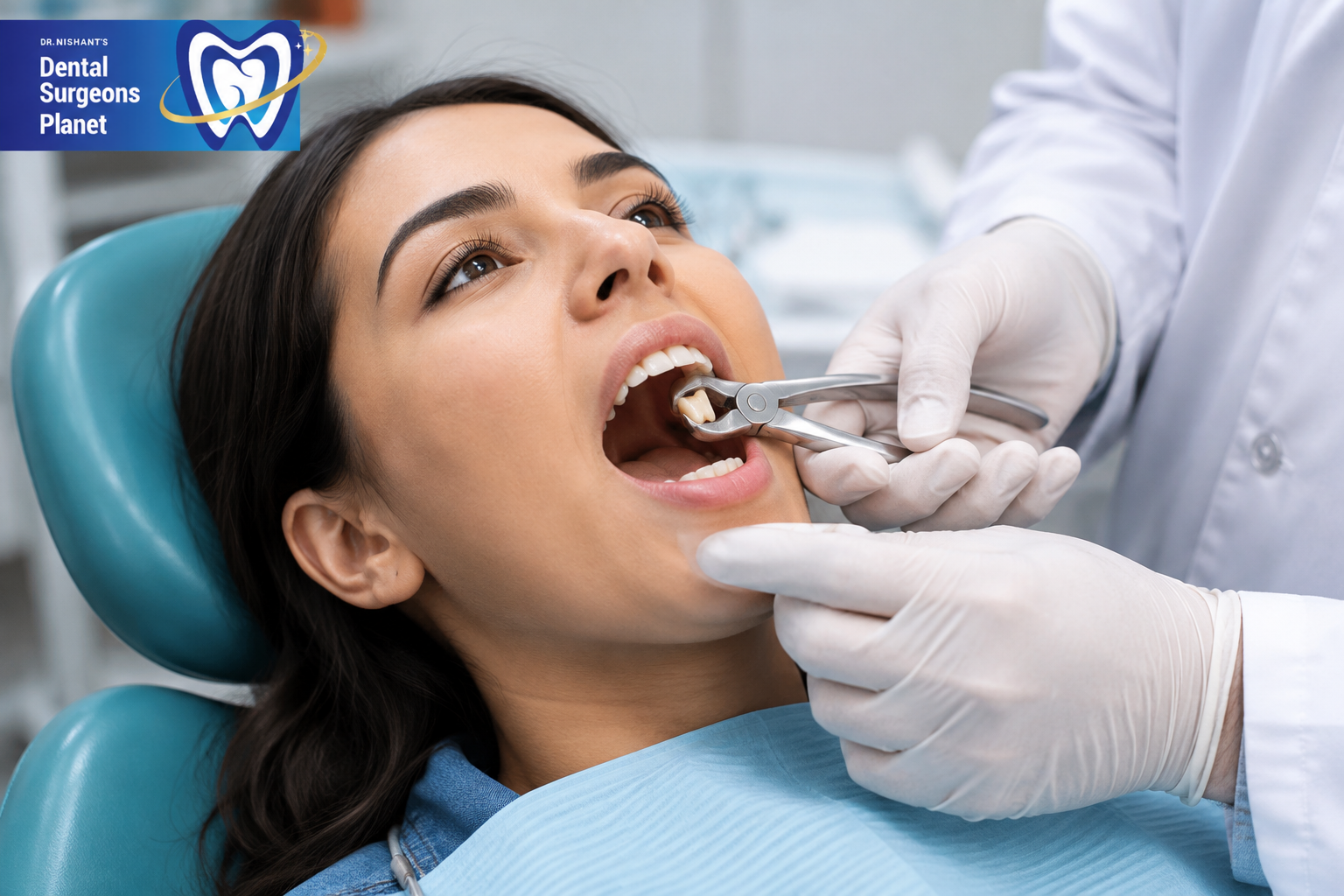
Tooth Extraction: When It's Necessary, Recovery Tips & Aftercare
Most people approach a tooth extraction appointment with significantly more anxiety than the procedure itself warrants. The anticipation — built from stories, assumptions, and the general cultural fear of anything dental — is almost always worse than the reality.
What patients consistently say after an extraction at a good dental clinic in Powai Mumbai is some version of the same thing: it was not nearly as bad as I expected, and I should have come in sooner.
The procedure itself, when performed with proper anaesthesia and appropriate technique, is genuinely manageable for the vast majority of patients. What determines your overall experience — how comfortable the procedure is, how quickly you heal, and whether complications develop — is a combination of your dentist's skill during the procedure and your own aftercare in the days that follow.
This guide covers both completely. When extraction is genuinely necessary versus when alternatives should be tried first, exactly what happens during the procedure, a realistic recovery timeline, and a complete aftercare guide with the specific do's and don'ts that prevent the most common complications.
When Is Tooth Extraction Actually Necessary?
This is the most important question — because extraction is a permanent, irreversible procedure and should only be recommended when genuinely necessary. Dentists at a good dental clinic in Powai Mumbai will always try to save a natural tooth before recommending removal.
These are the situations where extraction becomes the right clinical decision:
Severe irreparable decay
When tooth decay has progressed so extensively that the remaining tooth structure is insufficient to support a crown after root canal treatment, the tooth cannot be saved. A crumbling tooth with walls that fracture during examination is not a candidate for restoration — extraction removes the infection source and allows proper replacement planning.
Failed or failing root canal
A tooth that has had root canal treatment, received a crown, and subsequently develops recurrent infection or resorption may reach a point where retreatment is not viable. An honest endodontist will tell you when this threshold has been crossed.
Advanced periodontal disease
When gum disease has destroyed the bone supporting a tooth to such a degree that the tooth moves when pressed — what dentists call grade three mobility — the tooth has lost its foundation. In most cases extraction followed by an implant is a better long-term outcome than attempting to stabilise a tooth with severely compromised support.
Impacted wisdom teeth
Wisdom teeth that are fully or partially trapped beneath the gum or growing at an angle toward adjacent teeth cause recurrent pain, infection, and often damage the tooth in front of them. Once this pattern is established, extraction is almost always the recommended solution rather than repeated courses of antibiotics that address the symptom without solving the underlying problem.
Orthodontic space creation
In cases where the jaw does not have adequate space for all teeth to align correctly, planned extraction of specific premolars creates the space that allows remaining teeth to be moved into proper alignment with braces or Invisalign. This is entirely elective and planned — not an emergency.
Dental abscess with extensive bone involvement
A severe abscess that has destroyed significant surrounding bone and does not respond to root canal treatment and antibiotics may necessitate extraction to eliminate the infection source and prevent spread to adjacent structures.
Fractured root
A tooth fractured below the gum line due to trauma or biting on something hard — where the fracture line is in the root rather than the crown — typically cannot be restored. Root fractures are frequently invisible to the patient but apparent on X-ray examination.
What extraction is NOT necessary for
Mild to moderate decay that can be restored with a filling or crown. A tooth that is painful but can be saved with root canal treatment. A loose tooth in early periodontal disease where proper gum treatment may stabilise it. Any situation where a qualified second opinion might offer a viable alternative. Always feel comfortable asking whether alternatives exist before agreeing to extraction.
Simple vs Surgical Extraction — Understanding the Difference
Not all extractions are the same procedure. Understanding which type applies to your situation removes much of the uncertainty from the appointment.
Simple extraction
Performed on teeth that are fully visible above the gum line and have straightforward root anatomy. Under local anaesthesia, a dental instrument called an elevator loosens the tooth from the surrounding periodontal ligament, and forceps are used to remove it in one piece. Most patients are surprised at how quickly this is completed — typically 10 to 20 minutes from anaesthesia to gauze placement.
Surgical extraction
Required when a tooth is impacted below the gum line, broken at or below the gum line, has multiple curved or fused roots, or is otherwise not accessible by simple extraction technique. A small incision is made in the gum tissue to access the tooth. In some cases the tooth is divided into sections using a surgical handpiece and removed in pieces to minimise bone trauma. The incision is closed with sutures that dissolve over 7 to 10 days.
Wisdom tooth removal in Powai Mumbai is almost always a surgical extraction — impaction and root curvature make straightforward removal unusual.
What Happens During the Procedure — Step by Step
Knowing exactly what will happen removes most of the remaining fear for patients who are still anxious after understanding the anaesthesia process.
Examination and X-ray
Your dentist reviews the tooth and takes a fresh digital X-ray if one is not already available. This shows the root anatomy, bone level, proximity to nerves in the lower jaw, and confirms the extraction approach.
Topical anaesthetic
A gel is applied to the gum at the injection site for 60 to 90 seconds before the needle is placed. This numbs the surface tissue so the injection itself is minimally uncomfortable — a mild pressure sensation rather than a sharp pain.
Local anaesthetic injection
The anaesthetic is delivered slowly to minimise any sensation from the injection itself. Within 3 to 5 minutes, the tooth and surrounding tissue are completely numb. Your dentist will confirm numbness by tapping the area before proceeding.
Extraction
For simple extraction — elevation to loosen the tooth from the socket, then removal with forceps using a controlled rocking and rotating motion. You feel significant pressure and movement but no pain. If you feel pain at any point, raise your hand immediately — additional anaesthetic is administered without hesitation.
For surgical extraction — incision, bone access if needed, sectioning if required, then removal of sections. Sutures to close the incision.
Gauze and initial instructions
Gauze is placed firmly over the socket and you are asked to bite down steadily. Your dentist provides written aftercare instructions before you leave and answers any questions about the recovery process.
Total procedure time
Simple extraction — 15 to 30 minutes including anaesthesia time. Surgical wisdom tooth extraction — 30 to 60 minutes.
Realistic Recovery Timeline — What to Expect Day by Day
Recovery varies between patients based on the complexity of the extraction, the patient's age and general health, and how closely aftercare instructions are followed. Here is an honest day-by-day guide based on typical patient experience at Dental Surgeons Planet Powai:
Day 1 — The extraction day
Bleeding from the socket is normal for the first several hours and is controlled by biting firmly on the gauze pad. Once the anaesthesia wears off — usually 2 to 4 hours after the procedure — mild to moderate soreness begins. This is the most uncomfortable day for most patients. Take prescribed medication before the anaesthesia wears off rather than waiting for pain to develop. Rest, avoid physical activity, and keep your head elevated even while sleeping.
Day 2 and 3
Swelling typically peaks on the second day, particularly for surgical extractions and wisdom tooth removal. A slight fever of up to 37.5 degrees Celsius is normal as part of the inflammatory healing response. Pain should be manageable with prescribed medication and should not be worsening — if it is worsening rather than improving by day 3, contact your dentist. Most patients find day 2 comparable to day 1 in discomfort, with improvement beginning on day 3.
Day 4 and 5
Noticeable improvement for most patients. Swelling begins to reduce. Soreness becomes mild enough that over-the-counter pain relief may be sufficient without the stronger prescribed medication. Eating becomes easier as you find comfortable ways to manage soft foods. Most patients with desk-based work return to normal professional activity by day 4 or 5 after simple extractions.
Day 6 and 7
For simple extractions, most patients feel largely normal by the end of the first week. Surgical extraction patients — particularly wisdom tooth removals — may still have some residual soreness and mild swelling that continues to improve through the second week. Sutures begin to dissolve naturally during this period.
Week 2
Soft tissue healing is largely complete. The socket is covered by new gum tissue. Deeper bone healing within the socket continues for several more weeks but is not painful or noticeable. Normal eating is comfortably resumed for most patients by the end of week two.
Full bone healing
Complete bone filling of the extraction socket takes approximately 3 to 6 months. This is the timeline relevant for patients planning dental implant placement — your dentist will confirm at a follow-up appointment when the site is ready for the implant procedure.
Complete Aftercare Guide — What To Do and What To Avoid
This section is the most practically important part of the entire guide. Following these instructions correctly prevents the two most common complications — prolonged bleeding and dry socket — and ensures the fastest possible recovery.
Immediately after the procedure — first two hours
Bite firmly and steadily on the gauze pad placed by your dentist. Firm, steady pressure for 30 to 45 minutes is more effective at controlling bleeding than light, occasional biting. If bleeding continues after removing the first gauze, place a fresh piece and bite again for another 30 minutes. Slight pink-tinged saliva for several hours is normal — significant fresh bleeding that soaks through multiple gauze pads warrants a call to your dental clinic.
Do not touch the extraction site with your tongue or finger. The blood clot forming in the socket is the foundation of your healing — disturbing it risks dislodging it before it has stabilised.
Go home and rest. Avoid any physical exertion for the remainder of the day.
First 24 hours
Do not spit, rinse, or gargle for the full first 24 hours. This is the instruction most patients find counterintuitive but it is the most important one. Spitting and rinsing create negative pressure in the mouth that dislodges the blood clot — the primary cause of dry socket.
Do not use a straw for any drink. The suction force creates the same problem as spitting.
Do not smoke or use any form of tobacco. Nicotine constricts blood vessels and dramatically slows healing. The suction of smoking also risks clot dislodgement. Dentists in Powai Mumbai recommend avoiding tobacco for at least 72 hours — ideally longer.
Apply an ice pack to the cheek over the extraction site for 10 minutes on, 10 minutes off during the first 24 hours. This reduces swelling significantly compared to not icing at all.
Keep your head elevated when lying down. An extra pillow reduces blood pressure to the head and decreases both bleeding tendency and swelling development.
Eat soft, lukewarm foods only. Recommended options include curd, khichdi, mashed dal, banana, soft bread, mashed vegetables, soup that is not too hot, and scrambled eggs. Avoid anything requiring significant chewing, anything very hot or very cold, and anything spicy.
Take prescribed antibiotics and anti-inflammatory medication as directed — even if you feel fine. Stopping antibiotics early because symptoms have improved is one of the most common reasons for post-extraction infections.
Days 2 through 7
Begin gentle warm salt water rinsing starting 24 hours after the procedure. Dissolve half a teaspoon of clean salt in a glass of warm — not hot — water. Hold it gently in the mouth near the extraction site for 30 seconds, then allow it to fall out rather than spitting forcefully. Repeat twice a day. This keeps the socket clean without the force that disrupts healing.
Continue soft foods through the first week. Most patients can return to a normal diet by day 5 to 7 for simple extractions, and day 10 to 14 for surgical extractions.
Brush your teeth normally but avoid brushing directly over the extraction site for the first 3 to 4 days. Keep the rest of your mouth clean — poor oral hygiene in other areas increases bacterial load in the mouth overall.
Avoid alcohol for at least 48 hours. Alcohol interferes with the blood clotting process and interacts with prescribed medications.
Avoid strenuous physical exercise for the first 48 hours. Elevated heart rate and blood pressure increase bleeding risk in the healing socket.
If sutures were placed for a surgical extraction, do not try to remove them yourself. They dissolve naturally within 7 to 10 days.
When to contact your dentist immediately
Bleeding that does not stop despite proper gauze pressure after 2 hours. Pain that is getting significantly worse after day 3 rather than improving — particularly if accompanied by a bad taste or empty-feeling socket, which are the primary indicators of dry socket. Swelling that is increasing after day 3 rather than decreasing. Fever above 38 degrees Celsius. Difficulty breathing or swallowing — seek emergency medical care immediately as this may indicate spread of infection.
What Is Dry Socket and How to Prevent It
Dry socket — medically called alveolar osteitis — is the most common complication after tooth extraction and the one patients most commonly ask about. Understanding it clearly removes unnecessary anxiety and helps you take the specific steps that prevent it.
When a tooth is removed, a blood clot forms in the socket — this clot is the biological foundation for healing, protecting the underlying bone and nerve endings from exposure. Dry socket occurs when this clot is dislodged or fails to form adequately, leaving the bone and nerve endings directly exposed to the oral environment.
The result is a distinctive, intense, throbbing pain that typically begins 2 to 4 days after extraction — after the initial post-procedure soreness should be improving rather than worsening. The pain often radiates to the ear and jaw on the same side. A bad taste in the mouth and visible empty-looking socket confirm the diagnosis.
Dry socket occurs in approximately 2 to 5 percent of routine extractions and up to 30 percent of lower wisdom tooth extractions. Certain patients are at higher risk — smokers, patients taking oral contraceptives, patients who did not follow the no-rinsing and no-spitting instructions, and patients with poor blood supply to the extraction site.
Treatment for dry socket
If you develop dry socket, contact your dental clinic in Powai Mumbai immediately. Treatment involves irrigating the socket to remove debris and placing a medicated dressing directly into the socket that provides immediate pain relief by covering the exposed bone. Most patients experience significant pain reduction within hours of treatment. The dressing is changed every few days until healing has sufficiently covered the exposed bone.
Prevention is straightforward
The no-spitting, no-straw, no-smoking instructions for the first 24 to 72 hours exist specifically to protect the clot during its most vulnerable formation period. Patients who follow these instructions reduce their dry socket risk dramatically. Patients who smoke — even one cigarette in the first 72 hours — have significantly elevated risk.
Replacing the Missing Tooth — Why the Gap Cannot Be Left Permanently
This section addresses the decision that follows extraction — and one that affects your long-term dental health as much as the extraction itself.
When a tooth is removed, the jawbone beneath it immediately begins to lose stimulation. Without the daily loading forces from a functioning tooth root, the bone is resorbed by the body — a process that begins within weeks of extraction and continues progressively if not addressed.
Over months and years, this bone loss changes the shape of the jaw, causes adjacent teeth to tilt into the space, causes opposing teeth to over-erupt downward into the gap, and ultimately makes future tooth replacement more difficult and more expensive as bone volume decreases.
A gap left for aesthetic reasons or because the missing tooth is a back molar "nobody can see" still causes all of these structural problems regardless of its visibility.
Replacement options available in Powai Mumbai
Dental implant — the gold standard. A titanium root placed into the jawbone that stops bone loss, functions like a natural tooth, and with proper care lasts 20 to 25 years or a lifetime. Placement typically begins 3 to 6 months after extraction once initial bone healing is complete.
Dental bridge — crowns on the teeth either side of the gap support a false tooth in the middle. No surgery required. Less expensive than an implant upfront. Requires healthy adjacent teeth to support the bridge and does not stop the underlying bone loss.
Partial denture — a removable prosthetic for one or more missing teeth. The most affordable replacement option and the least comfortable long-term. Does not stop bone loss.
Your dentist at Dental Surgeons Planet Powai will discuss replacement timing and options at your extraction appointment or follow-up visit.
Tooth Extraction Cost in Powai Mumbai
| Type of Extraction | Approximate Cost |
|---|---|
| Simple extraction | ₹500 – ₹1,500 |
| Surgical extraction | ₹2,000 – ₹5,000 |
| Wisdom tooth removal (simple) | ₹2,000 – ₹4,000 |
| Wisdom tooth removal (surgical) | ₹4,000 – ₹10,000 |
| Emergency extraction | ₹2,000 – ₹6,000 |
| Extraction with bone grafting | ₹8,000 – ₹20,000 |
A written cost estimate is always provided after examination before any procedure is agreed to. The estimate covers the extraction and any immediate post-extraction treatment required.
FAQs
Q1. How long does tooth extraction pain last?
Mild soreness for 3 to 5 days is typical for simple extractions. Surgical wisdom tooth extractions may produce soreness lasting 5 to 7 days. Pain should follow a clear trajectory of improvement after the second day. Worsening pain after day 3 is not normal and warrants contact with your dentist.
Q2. Can I go to work the day after a simple tooth extraction?
For desk-based work — yes, most patients manage this comfortably. For physical or manual work, an additional day of rest is advisable. After surgical wisdom tooth extraction, two to three days off is more appropriate for most patients.
Q3. What foods can I eat after tooth extraction?
Soft, lukewarm foods for the first 3 to 5 days — curd, khichdi, mashed dal, banana, soft bread, soup, scrambled eggs. Avoid hot, cold, hard, crunchy, and spicy foods during initial healing.
Q4. How do I know if I have dry socket?
Pain that worsens 2 to 4 days after extraction rather than improving, often radiating to the ear. A bad taste in the mouth. Visible empty-looking socket. Contact your dental clinic immediately if you experience this combination of symptoms.
Q5. Is it safe to have multiple teeth extracted at the same appointment?
Yes, when clinically appropriate. Your dentist will assess whether your medical history, anaesthesia requirements, and expected recovery make same-day multiple extractions suitable for your specific situation.
Q6. When can I get a dental implant after extraction?
Typically 3 to 6 months after extraction, once initial bone healing in the socket is complete. Some cases qualify for immediate implant placement on the same day as extraction — your dentist will assess this during your consultation.
Conclusion
Tooth extraction is one of the most performed procedures at dental clinics in Powai Mumbai — routine, safe, and far more comfortable than its reputation suggests when performed with proper anaesthesia and appropriate technique.
What separates a smooth, complication-free recovery from a difficult one is rarely the procedure itself. It is the aftercare. Following the specific instructions in this guide — particularly the no-spitting, no-straw, no-smoking rules for the first 72 hours — prevents the complications that cause extended discomfort and additional treatment visits.
If you have been told you need an extraction and have been postponing it out of fear or uncertainty — understand that every week of delay allows an infected or damaged tooth to cause more bone damage, more adjacent tooth involvement, and a more complex procedure when you eventually do come in.
Visit Dental Surgeons Planet in Powai Mumbai for a thorough examination, an honest assessment of whether extraction is genuinely necessary or whether alternatives exist, and — when extraction is the right decision — a comfortable, precise procedure with clear aftercare support throughout your recovery.
The tooth causing you pain today does not have to still be causing it next week. Book your consultation in Powai Mumbai today.