


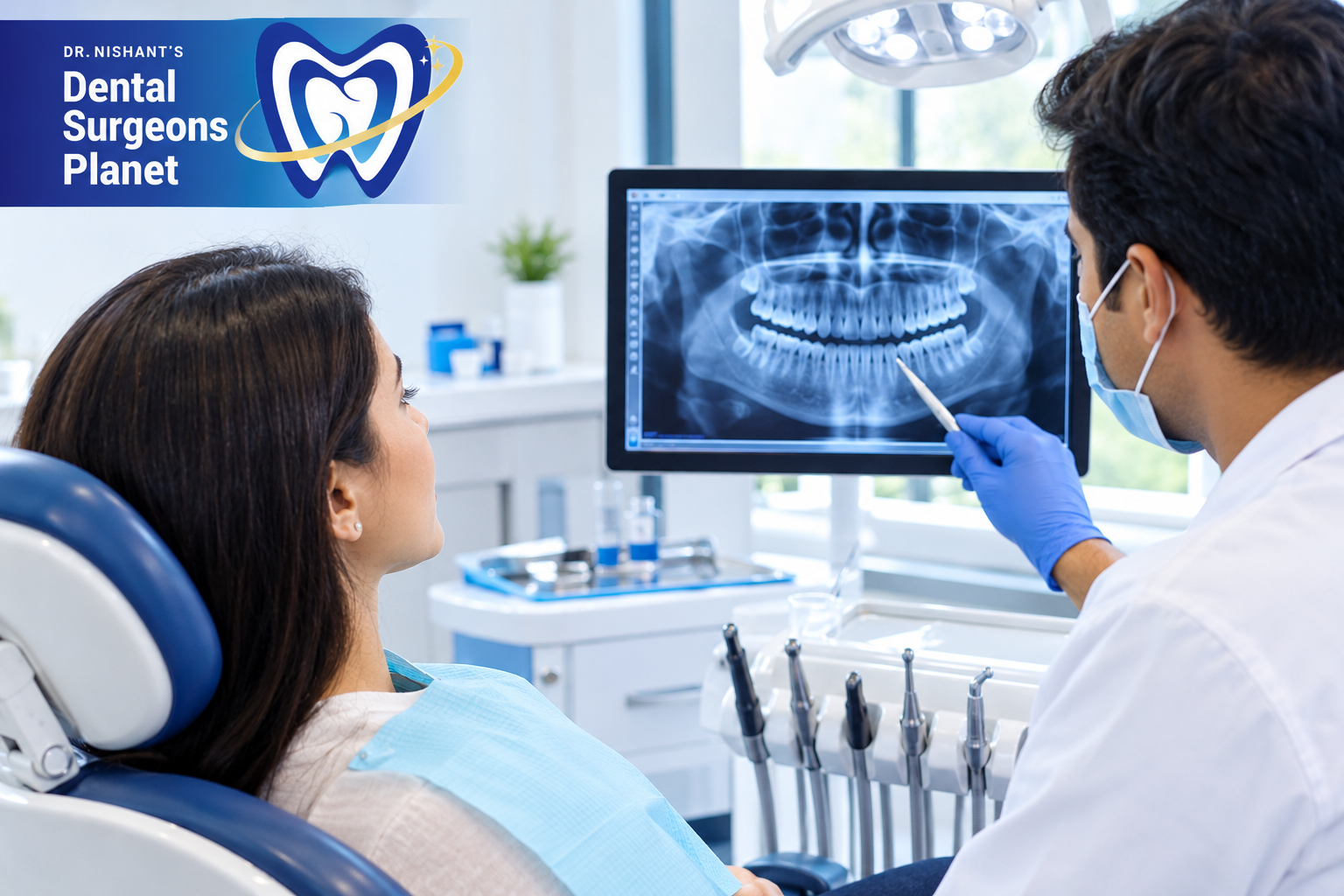
The One Dental Treatment Most Mumbai Patients Skip — And Why It’s Costing Them
If you asked a hundred patients sitting in dental waiting rooms across Mumbai which dental treatment they skip most consistently — the answer would not be root canals. Root canals get skipped out of fear. It would not be extractions. Those get skipped out of denial.
The treatment skipped most consistently, most casually, and with the least concern — is scaling and cleaning.
Not because patients are afraid of it. Not because it is expensive. Not because it takes long. But because it does not feel urgent. Nothing hurts. The teeth look acceptable. Life is busy. The appointment gets booked, then rescheduled, then forgotten entirely until something actually starts hurting — at which point the problem that scaling six months ago would have prevented has already become something significantly more expensive to fix.
This is the pattern dentists at Dental Surgeons Planet Powai see consistently — patients who come in for a painful problem that traces directly back to months or years of skipped scaling appointments. Gum disease that was gingivitis twelve months ago and is now periodontitis. Bone loss that was preventable. A tooth that needed extraction because the support structure around it deteriorated while the patient was waiting for something to hurt enough to act.
Scaling and cleaning is the most cost-effective, most preventively powerful dental treatment available — and it is the one most patients in Mumbai are not getting on schedule.
This guide explains exactly why — what scaling actually does, why skipping it has consequences that compound over time, what it costs versus what it prevents, and what actually changes in your mouth after one professional cleaning session.
What Scaling and Cleaning Actually Is — Beyond the Simple Definition
Most patients have a vague understanding that scaling involves removing buildup from teeth. What most do not understand is the nature of what is being removed, where it is, and why it cannot be removed any other way.
The plaque-to-tartar timeline
Every time you eat, a thin, sticky bacterial film called plaque forms on your tooth surfaces within minutes. This plaque is soft — your toothbrush disrupts and removes it effectively when you brush properly twice daily. This is the daily maintenance cycle that home oral hygiene manages.
The problem is that nobody brushes perfectly. Interdental spaces, the gum margin, the back surfaces of last molars, the lingual surfaces of lower front teeth — these areas consistently receive incomplete plaque removal even in patients with good oral hygiene habits. The plaque left in these areas undergoes a transformation within 24 to 72 hours — it mineralises, incorporating calcium and phosphate from saliva, and hardens into tartar — also called calculus.
Tartar is not soft plaque. It bonds chemically to the enamel surface with a strength that no toothbrush, no matter how electric, no matter how expensive, can overcome. It is rock-hard, porous, and covered in active bacteria that continuously release toxins into the surrounding gum tissue.
The only instrument that removes tartar is a professional dental scaler — either the ultrasonic piezoelectric scalers used at Dental Surgeons Planet Powai or fine hand curettes for detailed work below the gumline.
This is not a limitation of your toothbrush brand. It is basic chemistry. Tartar cannot be brushed away. It cannot be oil-pulled away. It cannot be dissolved by any mouthwash, herbal treatment, or home remedy available in India. It can only be removed by a dentist or dental hygienist with the right instruments.
Where tartar actually accumulates
Supragingival tartar — above the gumline — is the visible yellowish or brownish buildup that patients and their family members can sometimes see, particularly on the back surfaces of lower front teeth and along the gum margins of lower molars. This is the tartar that makes teeth look dirty and contributes to bad breath.
Subgingival tartar — below the gumline, hidden within the gum pocket surrounding each tooth — is invisible, unfelt, and far more dangerous than the visible variety. This is where the bacteria causing active gum disease live and where the destruction of supporting bone begins. Standard scaling removes supragingival tartar. Deep cleaning — subgingival scaling and root planing — addresses the deposits below the gumline that require a curette to access.
Both types build up continuously. Both require professional removal on a regular schedule. The schedule that prevents both from causing damage is the recommendation every dentist in Powai Mumbai gives — professional scaling every six months.
What Happens to Your Gums When Scaling Is Skipped — The Progression Nobody Sees Coming
This is the section most patients wish they had read before skipping several years of scaling appointments. The progression from healthy gums to significant gum disease does not happen dramatically. It happens in stages that feel unremarkable — until they are not.
Stage 1 — Gingivitis: Entirely Reversible
Tartar accumulating along the gumline irritates the gum tissue. The gums become inflamed — red, slightly swollen, and prone to bleeding when brushed. This is gingivitis — the earliest stage of gum disease — and it is completely reversible with professional scaling.
Most patients in Mumbai at this stage either do not notice the bleeding (it is brief and stops quickly) or notice it and assume it is normal. It is not normal. Healthy gums do not bleed when brushed with appropriate technique. Bleeding gums are inflamed gums, and inflamed gums are gums responding to bacterial toxins from tartar accumulation.
Gingivitis at this stage requires one scaling appointment to eliminate. The tartar is removed, the bacterial irritant is gone, and the gum inflammation resolves within days to weeks. Completely reversible. Entirely affordable. One appointment.
Stage 2 — Early Periodontitis: Partially Reversible
When gingivitis is not treated — when scaling continues to be skipped — the inflammation deepens. The gum begins to detach slightly from the tooth surface, creating a deepened pocket between the gum and the root. This pocket traps more bacteria and tartar, which deepens the pocket further.
At this stage, the infection begins to affect the bone supporting the tooth. Early bone loss occurs — millimetres of bone that will not regenerate without intervention. The patient still may not feel significant pain. Gums may bleed more readily. Breath becomes worse. The teeth look slightly longer as gum recession begins.
Treatment at this stage requires deep cleaning — subgingival scaling and root planing under local anaesthesia — rather than the standard cleaning that would have sufficed six months earlier. More expensive. More involved. More uncomfortable. Still manageable — but only with prompt attention.
Stage 3 — Moderate to Advanced Periodontitis: Largely Irreversible
Continued neglect allows the infection to progress into significant bone destruction. Pockets around teeth deepen to 5mm, 6mm, 7mm or more. The bone that once supported the tooth roots has been substantially resorbed. Teeth begin to feel loose. Gaps appear between teeth that were previously touching. The gum recession is now visible — teeth look noticeably longer than they should.
At this stage, scaling and cleaning alone is insufficient. Periodontal surgery — flap surgery to access and clean deep bone defects — may be required. Bone grafting to attempt regeneration of lost support. And for some teeth, extraction because the remaining bone cannot stabilise them regardless of treatment.
The treatment cost at this stage is not the ₹800 to ₹2,000 that a routine scaling would have cost. It is tens of thousands of rupees in periodontal surgery, extractions, and implants — for a condition that was entirely preventable at the gingivitis stage with a twice-yearly scaling appointment.
The bone loss that never comes back
This is the fact that most patients react to with genuine shock when their dentist shows them their X-ray at a periodontitis stage. The bone around the roots of their teeth has been destroyed — not by a dramatic event, not by any single thing they did or failed to do at any specific moment, but by years of chronic low-grade bacterial infection that progressed silently while they were waiting for something to hurt.
Bone lost to periodontal disease does not regenerate on its own. With bone grafting and guided tissue regeneration procedures, some recovery is possible — but full restoration to the original bone level is rarely achievable. The bone you lose to untreated gum disease stays lost.
This is why scaling is not a cosmetic treatment. It is a structural preservation treatment — maintaining the bone that keeps your teeth in your jaw.
The Systemic Health Connections — Why Gum Disease Affects More Than Your Mouth
Patients who still feel that skipped scaling is primarily a cosmetic concern — affecting appearance and breath rather than health — need to understand the research that has accumulated over the past two decades on the relationship between periodontal disease and systemic health.
Cardiovascular disease
The oral bacteria that thrive in the deep pockets of untreated periodontitis — particularly Porphyromonas gingivalis and Treponema denticola — enter the bloodstream through inflamed gum tissue with every chewing cycle. Multiple large studies have found associations between chronic periodontitis and increased risk of cardiovascular disease, atherosclerosis, and heart attack — with proposed mechanisms including bacterial-induced arterial inflammation and immune activation.
Diabetes — a two-way relationship
The relationship between diabetes and gum disease is bidirectional and well-documented. Uncontrolled blood sugar increases susceptibility to gum infection and impairs healing. Simultaneously, active gum disease makes blood glucose harder to control — the chronic inflammatory burden of periodontitis contributes to insulin resistance. Diabetic patients in Mumbai who skip scaling appointments are managing only part of their disease.
Respiratory infections
Oral bacteria aspirated into the lungs — more likely in patients with significant gum disease and poor oral hygiene — have been linked to increased risk of pneumonia and chronic obstructive pulmonary disease exacerbations, particularly in elderly patients and those already compromised.
Adverse pregnancy outcomes
Research has found associations between untreated periodontitis in pregnant women and increased risk of premature birth and low birth weight. The inflammatory cytokines produced by periodontal infection may trigger early labour mechanisms. Scaling and cleaning during the second trimester of pregnancy is recommended — not elective — for this reason.
Cognitive health
More recent research has found Porphyromonas gingivalis — a key periodontal pathogen — in the brain tissue of Alzheimer’s disease patients, with ongoing research investigating potential causal relationships. This research is preliminary but adds to the substantial evidence that the bacteria living in untreated gum pockets do not stay in the mouth.
The Real Cost of Skipping Scaling — A Direct Comparison
This comparison makes the financial argument for regular scaling more concisely than any amount of general explanation.
Patient A — Scales every 6 months consistently
Year 1: Two scaling appointments at ₹1,500 each = ₹3,000
Year 2: Two scaling appointments = ₹3,000
Year 3: Two scaling appointments = ₹3,000
Year 4: Two scaling appointments = ₹3,000
Year 5: Two scaling appointments = ₹3,000
Total 5-year cost: ₹15,000
Gum health: Stable. No bone loss. No active disease.
Patient B — Skips scaling for 5 years
Year 1 to 3: No dental spending on prevention
Year 4: Notices bleeding and sensitivity. One deep cleaning required: ₹5,000
Year 5: Significant bone loss confirmed on X-ray. Periodontal surgery required on four teeth: ₹25,000 to ₹40,000. Two teeth extracted due to insufficient bone support: ₹4,000. Implants to replace extracted teeth: ₹50,000 to ₹1,20,000.
Total 5-year cost: ₹84,000 to ₹1,69,000
Gum health: Permanently compromised. Bone loss irreversible. Two natural teeth lost.
This is not a hypothetical scenario. This is the patient journey dentists at Dental Surgeons Planet Powai see regularly — patients who arrive presenting the consequences of years of skipped prevention appointments, facing treatment costs that dwarf what prevention would have required.
What Actually Changes After One Professional Scaling Session
Patients who have their first professional scaling after years of gaps consistently report the same observations. Understanding these changes helps patients who have been dismissing scaling understand what they have been missing.
Within 24 to 48 hours
Gums stop bleeding when brushing. For patients who had resigned themselves to bleeding gums as normal — this change is sometimes startling. The bleeding that had been present every morning simply stops once the bacterial irritant causing the inflammation has been removed.
Within the first week
Breath noticeably freshens. The sulfur compounds produced by the bacteria in tartar and gum pockets — the primary cause of chronic bad breath that does not respond fully to brushing and mouthwash — are eliminated when the bacteria themselves are eliminated through scaling. Patients report that their mouth feels cleaner throughout the day rather than stale by midday regardless of oral hygiene efforts.
Within two weeks
Gum swelling and redness reduce significantly. The gum tissue, freed from constant bacterial irritation, returns to a healthier pink firmness from the red, puffy appearance of chronically inflamed tissue. Gums may appear to have slightly receded — this is the resolution of the inflammatory swelling, not actual recession, and is a positive sign of healing.
Ongoing
Teeth feel smoother. The rough, textured sensation that tongue-testing calculus-covered teeth produces is replaced by genuinely smooth enamel surfaces. Plaque adherence to smooth surfaces is reduced compared to the porous tartar that was present before — giving clean teeth a longer window before noticeable plaque accumulation.
Why Mumbai’s Lifestyle Makes Regular Scaling More Important, Not Less
Patients in Mumbai and Powai face specific lifestyle factors that increase their individual scaling needs compared to a general population baseline.
Chai and coffee consumption
Mumbai runs on multiple cups of chai daily — often 3 to 5 cups across the day. Tannins from tea and the acidity of both beverages contribute to surface staining and provide a favourable environment for the oral bacteria that produce tartar. Heavy tea and coffee drinkers accumulate visible supragingival tartar faster than moderate consumers.
Tobacco and gutka use
Tobacco dramatically impairs immune function in the gum tissue — reducing the local ability to fight bacterial infection — while simultaneously increasing tartar accumulation and the severity of periodontal disease. Smokers and tobacco users consistently develop more severe gum disease at a faster rate than non-users and require more frequent scaling — every 3 to 4 months rather than 6 — to manage this increased risk.
High-stress professional and student environments
Physiological stress suppresses immune function and increases cortisol — which directly impairs the gum tissue’s resistance to infection. Mumbai’s high-pressure work culture creates a population with chronically elevated stress hormones that are measurably associated with worsened periodontal outcomes. Stress also commonly causes teeth grinding — which accelerates bone loss around periodontally compromised teeth.
Irregular meal and sleep schedules
Late-night meals followed by inadequate brushing, skipped morning routines in rushed schedules, and irregular eating habits that maintain food substrate in the mouth for extended periods — all common in Mumbai’s lifestyle — increase the rate of plaque and tartar formation.
Air pollution
Research has linked air pollution exposure to increased gum inflammation and impaired healing — through direct mucosal irritation and through the systemic inflammatory load that chronic pollution exposure creates.
All of these factors argue for the upper end of scaling frequency recommendations for Mumbai patients — not the lower.
How Often Should You Get Scaling Done? The Honest Answer
The standard recommendation for healthy adults with no active gum disease and good oral hygiene is professional scaling every 6 months. This is the interval at which tartar accumulation in most patients reaches a level where professional removal is clearly beneficial before disease is initiated.
But 6 months is a population average, not a universal prescription. Individual scaling frequency should be based on your specific risk factors.
Every 3 to 4 months recommended for:
Patients with a history of gum disease or bone loss. Smokers and tobacco users of any kind. Diabetic patients — particularly those with suboptimal glucose control. Patients wearing orthodontic braces — where plaque control around brackets is inherently more difficult. Patients with dry mouth from medication side effects — saliva is a natural tartar-formation inhibitor, and its absence accelerates accumulation. Patients with aggressive tartar formation history — some patients simply calcify plaque faster than others regardless of hygiene habits.
Every 6 months for:
Healthy adults with no active disease history, good home oral hygiene, and no significant systemic risk factors.
At least annually for:
Patients at lower risk — young adults with excellent hygiene, no disease history, and no significant risk factors — though twice yearly remains the universally preferred recommendation even in low-risk populations.
Your dentist at Dental Surgeons Planet Powai assesses your individual risk profile at each appointment and recommends the appropriate interval for your specific situation rather than applying a single schedule to every patient.
Scaling and Cleaning Cost in Powai Mumbai — What You Are Actually Paying For
| Treatment | Approximate Cost | Time Required |
|---|---|---|
| Standard scaling and polishing | ₹800 – ₹2,000 | 30 to 45 minutes |
| Deep cleaning — full mouth | ₹2,000 – ₹5,000 | 60 to 90 minutes |
| Quadrant deep cleaning | ₹800 – ₹1,500 per section | 30 to 45 minutes per section |
| Scaling with fluoride treatment | ₹1,500 – ₹3,000 | 45 to 60 minutes |
| Scaling and whitening combo | ₹4,000 – ₹8,000 | 90 to 120 minutes |
When a patient in Powai Mumbai asks whether the cost of scaling is worth it — the comparison that answers the question most clearly is not scaling cost versus nothing. It is scaling cost versus the periodontal surgery, extractions, and implants that inadequate scaling prevention eventually leads to.
₹1,500 twice a year — ₹3,000 annually — is the maintenance cost that prevents tens of thousands of rupees in restorative treatment. There is no dental investment with a better return.
Myths About Scaling That Keep Mumbai Patients From Booking — Addressed Honestly
“Scaling makes teeth loose”
This is the most persistent myth about scaling in India — and the one that most consistently prevents patients from getting treatment they need.
The truth is the opposite of what this myth claims. Teeth do not become loose because of scaling. Teeth become loose because gum disease destroys the bone supporting them — and gum disease is what scaling prevents.
What patients experience after scaling — the sensation that teeth feel slightly different, perhaps a tiny bit more mobile to the tongue — is the resolution of the tight compression caused by calculus wedged between the teeth and between the teeth and gum. When that calculus is removed, the teeth settle into their actual position in the bone without the artificial rigidity the calculus was providing. The calculus was not holding the teeth — it was pushing them.
Any apparent looseness that patients perceive post-scaling is either this settling sensation resolving within days, or — in patients who already had significant bone loss — the pre-existing mobility becoming more apparent once the calculus splinting effect is removed. In the latter case, the looseness existed before scaling and was masked by calculus. Scaling did not cause it.
“Scaling damages enamel”
Modern ultrasonic scalers and hand curettes used at qualified dental clinics in Powai Mumbai are designed and used specifically to remove calculus without damaging enamel. The hardness of calculus and enamel are sufficiently different that selective removal of calculus while leaving enamel intact is entirely achievable with proper technique. Research consistently shows no measurable enamel loss from professional scaling performed with appropriate instruments and technique.
What damages enamel is not scaling. It is the acid produced by bacteria living in the tartar that was not removed.
“My teeth look fine so I don’t need scaling”
Subgingival tartar — the clinically significant tartar below the gumline where disease begins — is completely invisible without dental examination and probing. A patient whose teeth look clean from the outside can have significant subgingival calculus deposits causing active bone loss that is entirely asymptomatic until it has progressed substantially.
Looking fine is not the same as being fine. The clinical examination at a dental checkup exists precisely because the most damaging processes in dentistry are invisible until they are advanced.
“Oil pulling does the same thing as scaling”
Oil pulling is a traditional Ayurvedic practice that has documented mild benefits for reducing certain oral bacteria in the saliva and superficial gum tissue. It has no ability whatsoever to remove hardened calculus from tooth surfaces. The two are not comparable — one is a soft-tissue bacterial management technique, the other is the mechanical removal of mineralised deposits bonded to tooth enamel. Patients who substitute oil pulling for professional scaling are leaving their calculus deposits entirely unaddressed.
FAQs
Q1. How long does professional scaling take at a dental clinic in Powai Mumbai?
Standard full-mouth scaling and polishing takes 30 to 45 minutes at Dental Surgeons Planet Powai. Deep cleaning for patients with established gum disease takes 60 to 90 minutes and may be completed in two appointments — one half of the mouth per session — to manage post-procedure comfort.
Q2. Is scaling painful?
Standard scaling is not painful for most patients. Mild vibration and sensitivity near inflamed gum margins is common — particularly for patients who have not had scaling for an extended period and have significant calculus accumulation and gum inflammation. For sensitive patients or deep cleaning procedures, topical anaesthetic gel or local anaesthesia is available and used without hesitation.
Q3. How long after scaling before I see a difference?
Gum bleeding typically stops within 24 to 48 hours. Breath improvement is usually noticeable within a few days. Gum colour and firmness improvement — from red and puffy to pink and firm — takes 1 to 2 weeks as the resolved inflammation allows tissue to return to health.
Q4. Can I eat normally after scaling?
Yes — with minor modifications for the first 24 hours. Avoid very hot, very cold, or very spicy food for the first day. After 24 hours, eat completely normally. There are no lasting dietary restrictions following standard scaling.
Q5. Does scaling remove stains and make teeth whiter?
Scaling removes surface stains along with tartar — making teeth visibly cleaner and brighter than before. It is not a whitening treatment and does not bleach teeth. For significant shade improvement, professional whitening is recommended after scaling — clean tooth surfaces respond more evenly and effectively to whitening agents than tartar-covered ones.
Q6. Why does my dentist in Powai recommend scaling every 6 months when I feel fine?
Because the conditions that scaling prevents — gingivitis progressing to periodontitis and bone loss — develop and progress without symptoms until significant damage has occurred. The 6-month interval is calibrated to the rate at which tartar accumulates and causes damage in a typical patient — treating before disease advances rather than after. Feeling fine is the goal that regular scaling maintains, not evidence that scaling is unnecessary.
Conclusion
The dental treatment most Mumbai patients skip is not the scary one. It is not the painful one. It is not the expensive one. It is the straightforward, affordable, 45-minute appointment that prevents virtually every expensive, painful, complicated dental problem that chronic gum disease eventually creates.
Scaling and cleaning in Powai Mumbai every six months costs ₹800 to ₹2,000. It takes less time than most Netflix episodes. It leaves your mouth genuinely cleaner than any amount of home oral hygiene can achieve. And it is the single most cost-effective investment in your long-term dental health available to you.
The patients who spend the least on dental care over a lifetime — and keep their natural teeth the longest — are not the ones who avoid the dentist. They are the ones who come in regularly, get their scaling done on schedule, and never give gum disease the foothold that skipped appointments provide.
If you have been putting off your scaling appointment — this is the information you were waiting for. The appointment you have been postponing is the one that prevents the appointments you genuinely dread.
Book your scaling and cleaning appointment at Dental Surgeons Planet in Powai Mumbai today — and find out what your mouth actually feels like when it is genuinely, professionally clean.
One appointment. One hour. A mouth that feels better than it has in years. Book today.